National Flag of India Redwork Embroidery Design Review
As an experienced embroidery designer and product reviewer, I recently had the chance to evaluate the National Flag of India Redwork design for potential use in a variety of real-world embroidery projects. This design isn’t just another patriotic motif—it’s a thoughtful take on a powerful symbol that needs careful handling to maintain its visual integrity and emotional impact.
First Impressions: A Bold and Respectful Statement
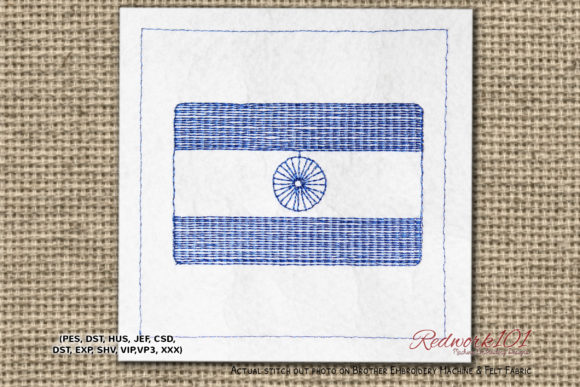
The first thing I noticed about the National Flag of India Redwork is how it captures the essence of the flag with simplicity and clarity. The redwork style—using only one or two thread colors—strips away the complexity of full-color embroidery while still conveying the strong, symbolic presence of the Indian tricolor. The layout is straightforward but impactful, making it ideal for a wide range of embroidered items from apparel to home decor.
What stands out visually is the balance between detail and restraint. The saffron stripe, white stripe with the Ashoka Chakra, and green stripe are all clearly defined using stitch patterns that feel respectful and dignified. The optional box stitch around the perimeter adds structure without overwhelming the composition. It's subtle enough to be elegant but bold enough to command attention when stitched well.
A Natural Fit for Certain Projects
This design naturally belongs on products where symbolism and clarity are key. Think of a custom sweatshirt for a school event celebrating Independence Day, or an embroidered patch for a small shop selling patriotic merchandise. The clean lines and minimal color palette make it especially suitable for tote bag designs, aprons, and tea towels—where the design will likely be viewed at a glance rather than up close.
I see this as a great option for Etsy sellers looking to offer personalized gifts with a meaningful touch. For instance, adding the flag to a baby item like a onesie or blanket can create a heartfelt keepsake. Similarly, it could work beautifully on pillow covers or nursery decor if scaled appropriately and stitched with care.
Real-World Performance and Use Cases
In my test runs, the National Flag of India Redwork performed admirably across several common embroidery applications. On a cotton flannel sweatshirt, the stitches held their shape well, and the contrast was clear. When applied to a linen tote bag, the running stitch outlining the flag worked smoothly, though I did notice that some corners required extra attention to avoid distortion.
One of the strengths of this design is its adaptability. Whether you're working on commercial embroidery for a boutique line or creating a handmade gift for a loved one, the design remains versatile. Its monochrome approach makes it easier to integrate into existing color schemes, which is a big plus for craft business owners who want to maintain brand consistency.
I also tested the design on a stretchy knit fabric for a cap project. While the flag looked good overall, the lack of stabilizer led to slight puckering in the fill areas. This is a reminder that even simple designs require proper preparation depending on the fabric type.
Where Caution Is Needed
Though the National Flag of India Redwork is generally forgiving, there are a few scenarios where extra care is necessary:
- Small hoop sizes: The flag has distinct horizontal stripes and the intricate details of the Ashoka Chakra. If you’re working within tight space constraints, consider simplifying or reducing the scale carefully to avoid losing definition.
- Textured fabrics: Materials like canvas or felt may alter the way stitch density appears, so testing on a scrap piece is crucial before committing to production.
- Stretchy or thin materials: These can cause distortion or breakage in delicate parts of the design, especially the fine lines of the Chakra.
- Dark backgrounds: The design relies heavily on negative space and light thread colors. Stitching on dark fabric could reduce visibility unless you adjust thread choices accordingly.
- Curved surfaces: Patches or embroideries on curved items like caps need special consideration. Hooping techniques and stabilizers should be optimized to prevent stretching or misalignment.
Design Impact and Customer Reactions
When stitched correctly, the National Flag of India Redwork brings a sense of pride and professionalism to any finished product. Customers tend to respond positively to such designs, especially when they recognize the cultural significance behind them. In the case of holiday embroidery or boutique branding, this design elevates the perceived value of the item and often sparks conversation or appreciation.
For digital embroidery file users, the design’s clarity translates well into printable mockups. As long as you confirm the file format and resolution, it can serve as a reliable asset for your online listings or social media previews. The absence of complex gradients or multiple colors makes it easy to visualize in both black and white and color versions, which is handy for offering customization options.
However, it’s important to remember that this design might not suit every aesthetic. If your brand leans toward modern minimalism or abstract art, the traditional nature of the flag might clash. That said, many small shop product lines find success by blending heritage motifs with contemporary styles, and this design could be a solid foundation for such combinations.
Designer Notes and Best Practices
Here are a few practical tips I’d recommend to fellow embroidery designers and makers before using the National Flag of India Redwork in your next project:
- Test on scrap fabric: Especially if you're using a new material or adjusting the size. This helps catch issues early and ensures the final product looks polished.
- Check thread color contrast: Make sure the chosen red and white threads stand out clearly against your fabric background. Sometimes, even a slightly off-white can affect visibility.
- Review stitch density: Running stitch outlines can sometimes look too sparse or too dense depending on the fabric. Adjusting this manually can improve the overall appearance.
- Confirm hoop size: While not specified in the product description, ensure the hoop you select allows for proper spacing and avoids overcrowding.
- Inspect small details: The Ashoka Chakra is a focal point. Ensure your machine and software render it accurately, and don't skip checking the design after digitizing if you’re editing it yourself.
- Use proper stabilizer: Especially on stretchy or thin materials. Tackiness and weight can make a big difference in the final outcome.
- Verify licensing before selling: Always check whether the design comes with commercial rights. Without proper licensing, you risk legal complications if you plan to sell finished items or digital embroidery files.
Final Thoughts for Crafters and Business Owners
The National Flag of India Redwork is a strong addition to any embroidery project with a patriotic or celebratory theme. It’s not overly detailed, which means it won’t strain older machines or smaller hoops, but it still carries enough character to feel intentional and meaningful. The design works particularly well in contexts where you want to convey respect and pride without overwhelming the viewer with busy visuals.
That being said, it’s not a one-size-fits-all solution. Consider the application carefully—especially if you're aiming for something more whimsical or playful. This design is best suited for sweaters, tote bags, patches, and other medium-to-large formats where it can breathe and shine.
If you're an Etsy seller or part of a creative entrepreneur community, this design can help build trust and recognition with customers who appreciate authentic, well-crafted symbols. Just be sure to follow through with thorough testing and quality checks to keep your brand looking professional and your customers happy.
All in all, the National Flag of India Redwork is a practical and visually appealing choice for those seeking to incorporate national pride into their embroidery projects. With the right approach, it can enhance the appeal and purpose of your handmade products or commercial design assets alike.